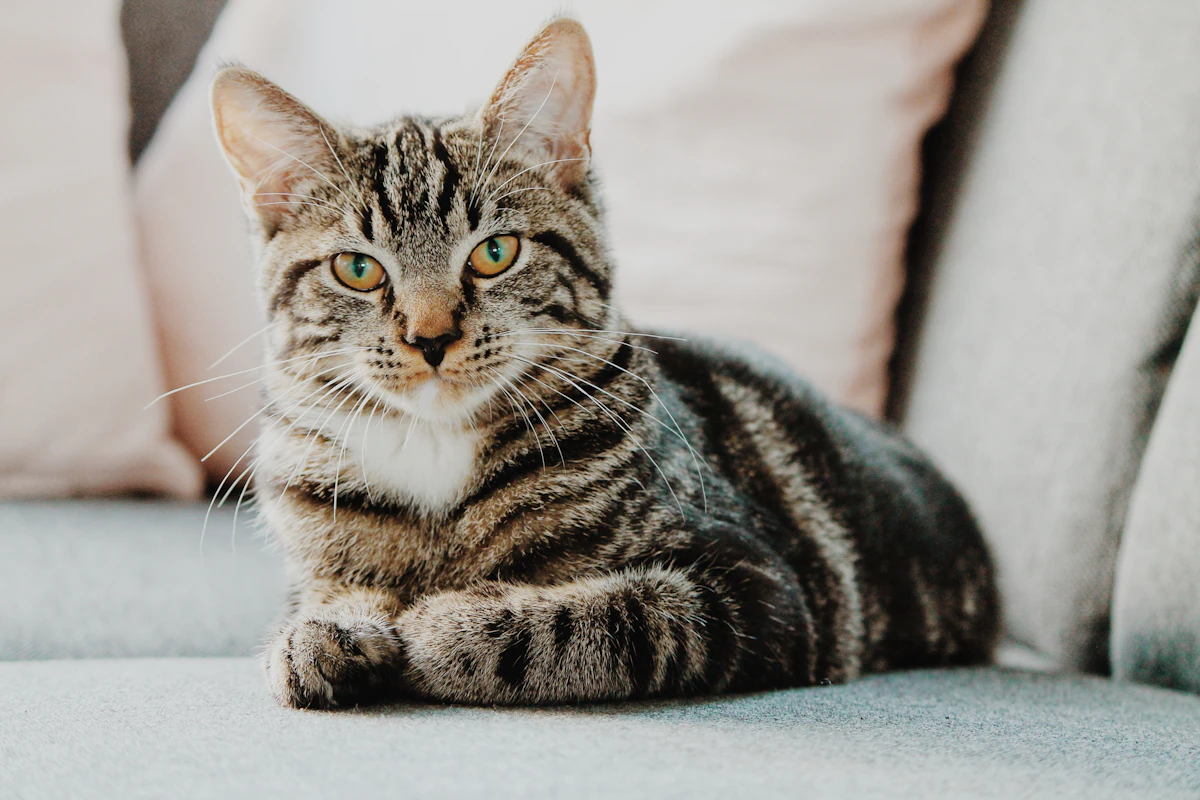
- Young or middle-aged cat, yowling around meal times or when you're in bed? Almost certainly hunger or attention-seeking — both very fixable.
- Unspayed or unneutered? Hormonal/mating behavior is the likely cause, especially with other signs like restlessness or rubbing against furniture.
- Senior cat (10+), yowling is new, and it's paired with weight loss despite eating more? Hyperthyroidism is common at this age and very treatable.
- Senior cat, yowling with disorientation, wandering, or seeming "lost" in familiar rooms? This points toward cognitive decline or sensory loss — worth a vet visit.
- Yowling paired with limping, hiding, or reluctance to move? Pain is a real possibility and should be checked rather than assumed to be behavioral.
The First Night Luna Wouldn't Stop
It started around 1am — a long, loud yowl from the hallway, nothing like her normal meow. I got up assuming something was wrong, checked every room, and found nothing. Food bowl full, litter box clean, no sign of distress. Twenty minutes later, she did it again. And again, every hour or so, for most of the night.
My first thought was that she was in pain. My second thought, once I'd ruled out anything obviously wrong, was that I had no idea what was actually going on — and that "cat yowling at night" is one of those behaviors that gets dismissed as random, when it almost never actually is.
What I found after digging into it properly is that night yowling has a fairly short list of real causes, and most of them come with other clues that point straight to the answer once you know what to look for. For Luna, it turned out to be a feeding-schedule gap — a long stretch between her evening meal and breakfast that left her genuinely hungry by the early hours. But the same behavior in an older cat can mean something very different, which is why age matters so much here.
Here's everything I put together — all 8 causes, how to tell them apart, and what actually worked to get our nights quiet again.
Why a Yowl Is Different From a Regular Meow
Cats have a wide vocal range, and a yowl is distinct from a normal meow — it's louder, longer, lower-pitched, and often more drawn-out or mournful-sounding. Cats generally reserve it for moments of strong need, want, or distress: hunger, mating behavior, confusion, or discomfort. It's also simply more noticeable at night, since the house is quiet and a loud vocal cat has nothing competing with it for attention.
Nighttime specifically matters too — cats are crepuscular, meaning they're naturally most active around dawn and dusk, and some of that instinctive energy and alertness spills into the hours we're trying to sleep. That baseline tendency, combined with one of the 8 causes below, is usually what's actually happening.
8 Reasons Your Cat Is Yowling at Night
I've grouped these roughly by how common they are across all ages, with the age-specific causes toward the end — age is one of the biggest clues for narrowing this down.
1. Hunger or a feeding schedule gap
A long overnight gap between the last meal and breakfast is one of the most common and most overlooked causes, especially in cats fed once in the evening with nothing until morning. The cat genuinely gets hungry in the early hours and yowls to ask for food — exactly what was happening with Luna. A late, small meal before bed, or a timed automatic feeder set for 3-5am, usually resolves this within a few nights.
2. Attention-seeking
Cats learn quickly what gets a response, and if yowling has ever resulted in being fed, played with, or comforted — even once — it can become a reliable strategy for getting attention, particularly from an owner who's otherwise asleep and unresponsive during the day. This is especially common in cats who are home alone most of the day and have pent-up social energy by nighttime.
3. Boredom and pent-up energy ("night zoomies")
A cat that sleeps most of the day, especially an indoor-only cat with limited stimulation, often has a burst of unspent energy at night — sometimes showing up as running laps around the house, sometimes as persistent yowling, often both. This is especially common in young, single-cat households without much daytime enrichment.
4. Hormonal or mating behavior
Unspayed female cats in heat produce a very distinctive, loud, drawn-out yowl specifically to attract mates, often paired with rolling around, increased affection, and raised hindquarters. Unneutered males can also yowl in response to a female in heat nearby, even through walls or windows. If your cat isn't spayed or neutered, this is one of the first things to rule out — and spaying/neutering reliably resolves it.
5. Cognitive dysfunction (feline dementia)
In senior cats, typically 10 years and older, a dementia-like condition called feline cognitive dysfunction can cause confusion, disorientation, and distress that often peaks at night — sometimes called "sundowning," a term borrowed from the equivalent human condition. Affected cats may yowl while wandering, appear lost in familiar rooms, or seem to be calling out without a clear reason. This is a medical condition that benefits from veterinary management, including environmental adjustments and in some cases medication.
6. Hyperthyroidism
Very common in cats over 8-10 years old, an overactive thyroid gland speeds up metabolism and commonly causes restlessness, increased vocalization, a ravenous appetite paired with weight loss, and a faster heart rate. Night yowling in an older cat that's also lost weight despite eating more is a strong pointer toward this — it's diagnosed with a simple blood test and is very treatable.
7. Vision or hearing loss
Age-related decline in sight or hearing can leave a senior cat feeling disoriented, especially in the dark or in a quiet house, and calling out is often a way of checking that you're still nearby or seeking reassurance. This frequently overlaps with cognitive decline but can also occur on its own in an otherwise cognitively sharp older cat.
8. Pain or underlying illness
Arthritis, dental pain, urinary tract issues, or other sources of discomfort can all cause a cat to vocalize more, including at night when there's less distraction and the cat is settling in one spot long enough to notice the discomfort. This is worth taking seriously, especially if the yowling is paired with reduced mobility, hiding, changes in litter box habits, or reluctance to be touched in a specific area.
Normal Nighttime Vocalizing vs. Concerning Yowling
| Signal | Likely behavioral | Worth a vet visit |
|---|---|---|
| Age | Young to middle-aged | Senior (10+ years), especially new-onset |
| Pattern | Tied to feeding times or specific triggers | Random, disoriented, or accompanied by wandering |
| Weight & appetite | Stable | Weight loss despite eating more |
| Other behavior changes | None | Hiding, reduced mobility, litter box changes |
| Response to a fix (feeding, play, spay/neuter) | Improves within days | No improvement |

What to Do
Here's roughly the order I'd work through this, and what I actually changed with Luna.
Close the overnight feeding gap
I moved Luna's last meal later in the evening and added a small automatic feeder set to release a portion around 4am. The yowling stopped within three nights — this alone resolves a large share of cases.
Add an evening play session
A 10-15 minute wand-toy session an hour or two before bed burns off pent-up energy and makes a real difference for boredom-driven yowling, especially in younger, single-cat households.
Stop reinforcing attention-seeking yowling
If hunger and health are ruled out, consistently not responding to the yowl itself — while still giving the cat attention at other calm moments during the day — breaks the learned pattern over 1-2 weeks.
Spay or neuter if not already done
If hormonal yowling is the likely cause, this is the direct fix, and it comes with other long-term health benefits regardless.
Book a vet check for any cat 10+ or showing other changes
For a senior cat, or any cat where the yowling is new and unexplained, a vet visit with bloodwork (to check thyroid levels) and a general exam is the right next step rather than assuming it's purely behavioral.
- Don't respond to yowling with food, play, or comfort every time — this reliably reinforces attention-seeking behavior, even unintentionally.
- Don't assume an older cat's new yowling is "just old age" — hyperthyroidism and cognitive decline are both common and both manageable once identified.
- Don't punish or shout at a yowling cat — it doesn't address the cause and can add stress on top of whatever's already driving the behavior.
- Don't skip a vet visit because the cat seems otherwise fine — hyperthyroidism and early cognitive decline often show few other visible signs at first.
- Don't leave an unspayed/unneutered cat's hormonal yowling unaddressed — it typically continues and often worsens with each cycle.
When to Seek Veterinary Help
- Your cat is 10+ years old and the yowling is new or worsening
- There's weight loss despite a bigger appetite
- Your cat seems disoriented, confused, or "lost" in familiar spaces
- Yowling is paired with hiding, reduced mobility, or litter box changes
- Feeding, play, and spay/neuter changes haven't helped after 1-2 weeks
- Yowling is paired with straining to urinate or visible pain — this can be a urinary emergency, especially in male cats
- Your cat is also lethargic, not eating, or vomiting
- The yowling sounds distressed rather than demanding, and nothing you try settles it
Common Questions
Occasional vocalizing at night is normal — cats are naturally more active at dawn and dusk, and a short meow or two asking for food or attention isn't a concern. It becomes worth investigating when the yowling is loud, repetitive, happens most nights, or is new behavior. Sudden-onset or escalating night yowling, especially in a cat over 10 years old, is more often tied to a specific cause than random nighttime noise.
Sudden-onset night yowling in a senior cat most commonly points to feline cognitive dysfunction, hyperthyroidism, or vision/hearing loss causing disorientation. All three are common in senior cats and worth ruling out with a vet visit, since hyperthyroidism in particular is very treatable once diagnosed.
First rule out hunger and medical causes. If it is genuinely attention-seeking, stop reinforcing it: avoid feeding, playing with, or comforting the cat the moment they yowl. Add a vigorous play session before bed, consider a timed feeder for an early-morning meal, and ignore yowling consistently so the behavior isn't accidentally rewarded.
Yes. Hyperthyroidism is common in cats over 8-10 years old, and increased vocalization — including loud yowling, often at night — is a frequently reported symptom alongside restlessness and weight loss despite a ravenous appetite. It's diagnosed with a blood test and is very treatable, with vocalization typically improving once thyroid levels are controlled.